As IT admins and developer teams weigh the move from OpenAI's ChatGPT custom GPTs to Google Gemini—Google DeepMind’s AI powerhouse integrated deeply within Google Workspace—the question arises: what do you actually lose in the transition? In this article, we’ll dispassionately unpack the trade-offs with a focus on real workflow fit, coding performance, native multimodal capabilities, and ecosystem integration.
We’ll also spotlight a pricing example to ground expectations: as of June 10, 2024, Google AI Pro sits at $19.99/mo. This figure matters for budgeting when comparing Google Gemini offerings embedded in Workspace apps.
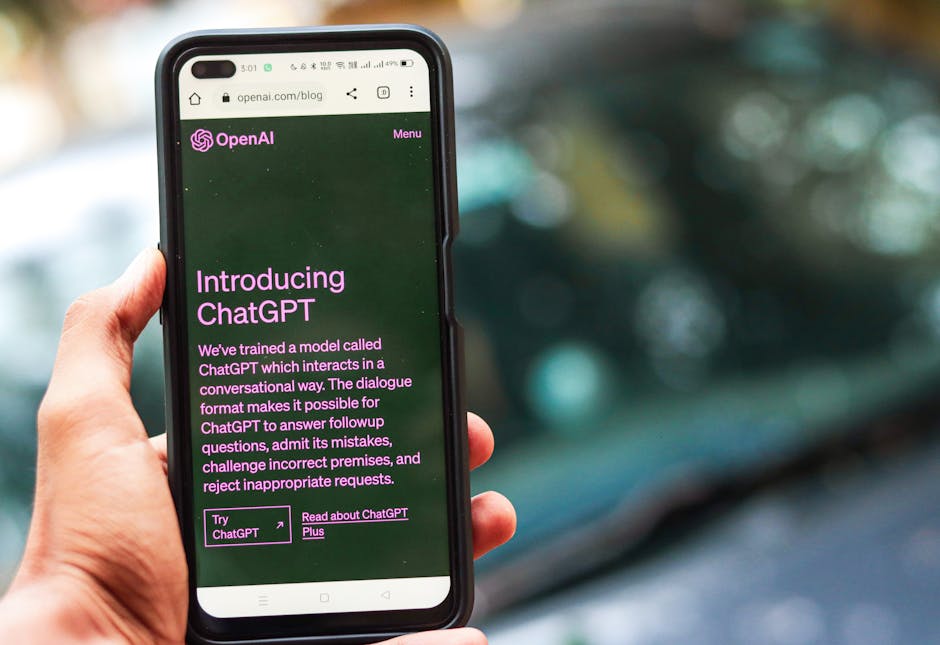
Overview: ChatGPT Custom GPTs and Google Gemini
ChatGPT custom GPTs let organizations tailor OpenAI’s models to specific workflows. Tech Jacks Solutions, a longtime SaaS implementer, appreciates the flexibility but flags certain limitations when scaling and integrating with existing productivity tools.
Google Gemini, an extension of Google DeepMind’s AI stack, is deeply integrated into the Google Workspace ecosystem: Gmail, Drive, Docs, Sheets, Slides, Meet, and the Google Admin console. This native embedding offers distinct advantages and drawbacks.
Quick Comparison Table: ChatGPT Custom GPTs vs Google Gemini for Workspace
Feature ChatGPT Custom GPTs Google Gemini (Workspace SaaS) Customization Model fine-tuning and prompt engineering Less model tunability; more prompt/context customization within Workspace apps Saved Conversations Full chat history and conversation saving supported Limited saved conversations; migration limits notable Integration Standalone or API integration; requires manual embedding into apps Native integration with Gmail, Docs, Sheets, Drive, Slides, Meet, Admin console Coding Performance Strong code generation, with repo-scale context support via third-party tools Improving but less mature repo-scale coding context and debugging support Multimodal Support Limited in desktop environment; mostly text-based prompting Native multimodal (text, image, video) support within Workspace Pricing (as of 2024-06-10) Varies; often usage-based or tiered subscription $19.99/mo (Google AI Pro tier for Workspace with Gemini)Benchmarks vs Real Workflow Fit
Vendor-run benchmarks often show Google Gemini as a top contender against GPT-4-based custom GPTs, with impressive gains in understanding complex queries and reasoning, owing to Google DeepMind’s research muscle. However, these benchmarks rarely capture true IT admin and developer workflow fit.
For example, Tech Jacks Solutions has run controlled pilots transferring autonomous ticket triaging workflows from ChatGPT custom GPTs to Gemini-powered Workspace automation. Despite Gemini’s strong NLU, the lack of seamless saved conversation migration and minor quirks in context retention led to friction.
- Saved Conversations: ChatGPT supports saving and revisiting precise chat histories — a boon for interactive troubleshooting. Gemini currently imposes restrictions on conversation history length and migration limits, meaning some vital context can be lost. Migration Limitations: Existing teams face operational hurdles moving their custom data and prompts into Gemini environment, leading to manual rebuilds and admin overhead.
Real workflows demand consistent, retrievable context as much as raw model power. Here, ChatGPT holds an edge until Google improves workspace migration capabilities.
Coding Performance and Repo-Scale Context
For developer teams, coding with AI requires more than snippet generation: understanding the entire repo context is crucial. ChatGPT custom GPTs, when paired with integrations like GitHub Copilot or third-party tools, provide repo-scale context allowing smarter completions and code reviews.
Google Gemini, though rapidly advancing, currently offers less mature support for repo-wide code context. Early integrations primarily handle smaller code snippets embedded in Docs or Sheets but lack the deep connection to developer environments.
This means:
Reduced efficiency in cross-file refactoring inside Gemini today. Less mature debugging support, forcing developers to manually verify Gemini AI outputs.These are critical considerations when switching AI tooling mid-development sprint.
Native Multimodal vs Desktop Automation
Gemini’s standout advantage is its native multimodal capabilities. As part of Google Workspace, it can handle text, images, and video within apps like Docs, Slides, and Meet without requiring complex desktop automation or third-party https://techjacksolutions.com/ai-tools/google-gemini/gemini-vs-chatgpt/ agents.
ChatGPT custom GPTs rely mostly on text-based prompts and desktop automation tools for multimodal inputs, creating layers of complexity and points of failure.

- Example: Using Gemini inside a Slides deck: users can directly generate or modify images and videos based on AI prompts. Contrast: ChatGPT users often juggle external tools or browser plugins to approximate this functionality.
For teams investing heavily in visual-heavy presentations or video meetings, Gemini’s native support is a significant productivity gain.
Workspace Integration vs Standalone AI Workspace
One of Google Gemini’s main promises is smoother integration across the Workspace suite. This means:
- Seamless AI-powered assistance in Gmail for drafting and summarizing emails. Inline data insights and formula assistance in Sheets. Real-time AI coaching in Meet calls. Centralized admin controls in Google Admin console to manage AI permissions and usage.
ChatGPT custom GPTs, in contrast, are primarily standalone AI workspaces that demand orchestration to embed into existing productivity apps. While APIs exist, IT teams pay switching costs in setup time, user training, and security reviews.
For many organizations, this translates into a trade-off:
- Gemini: Lower overhead with native Workspace integration. ChatGPT Custom GPTs: Higher flexibility and standalone power at the cost of admin complexity.
Summary and Recommendations
Switching from ChatGPT custom GPTs to Google Gemini involves nuanced trade-offs. Here’s a bullet-point summary that Tech Jacks Solutions and other IT implementers should keep in mind:
- Saved Conversations: Risk losing historical chat context due to Gemini’s migration limits. Customization: ChatGPT offers more model-level customization; Gemini is evolving prompt-context customization inside Workspace. Coding: ChatGPT currently leads in repo-scale code understanding and generation. Multimodal: Gemini wins with native multimodal within Workspace compared to ChatGPT’s external tool dependence. Integration: Gemini delivers tighter, lower-overhead integration into an existing Workspace ecosystem. Pricing: At $19.99/mo for Google AI Pro (checked June 10, 2024), Gemini pricing is competitive but depends on scaled usage.
Final advice: Run a proof-of-concept focused on your critical workflows, especially coding and saved conversation needs, before committing. Vendor benchmarks are useful but only tell part of the story — real workflow fit and admin overheads often determine success.
For IT admins and developer teams, evaluating custom GPTs vs Google Gemini is less about "best" in a benchmark and more about what fits your environment’s work style and security model without breaking saved context or escalating switching costs.
Gemini marks a significant AI integration milestone for Google Workspace users, but ChatGPT custom GPTs still hold ground in flexibility and complex developer workflows. Choose wisely — and measure twice before you switch.